
Wednesday, October 24, 2012


torque!
What is Torque?
Torque is a force that tends to rotate or turn things. You generate a torque any time you apply a force using a wrench. Tightening the lug nuts on your wheels is a good example. When you use a wrench, you apply a force to the handle. This force creates a torque on the lug nut, which tends to turn the lug nut.
English units of torque are pound-inches or pound-feet; the SI unit is the Newton-meter. Notice that the torque units contain a distance and a force. To calculate the torque, you just multiply the force by the distance from the center. In the case of the lug nuts, if the wrench is a foot long, and you put 200 pounds of force on it, you are generating 200 pound-feet of torque. If you use a 2-foot wrench, you only need to put 100 pounds of force on it to generate the same torque.
combustion chamber
A car engine creates torque and uses it to spin the crankshaft. This torque is created exactly the same way: A force is applied at a distance.
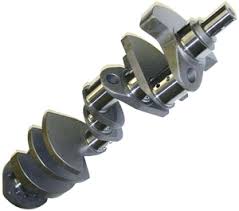 the point where the connecting rod attaches to the crank shaft is some distance from the center of the shaft. The horizontal distance changes as the crankshaft spins, so the torque also changes, since torque equals force multiplied by distance.when the piston is at the top of its stroke, the connecting rod points straight down at the center of the crankshaft. No torque is generated in this position, because only the force that acts on the lever in a direction perpendicular to the lever generates a torque.

How torque is generated in one cylinder of a four-stroke engine
The combustion of gas in the cylinder creates pressure against the piston. That pressure creates a force on the piston, which pushes it down. The force is transmitted from the piston to the connecting rod, and from the connecting rod into the crankshaft.
crankshaft
connecting rod
Import car excise duty reduction will collapse used car market, drop income revenue for government
Reducing excise duties for imported cars will result in the collapse of the second-hand market, said PM Datuk Seri Najib Tun Razak. He added that such the government will potentially incur a revenue depreciation in such a move, as it collects RM7 billion a year in import car excise duty, according to aBernama report.
“We need to look in depth. It is not the time to come up with long-term solutions,” he said at #Tanya Najib: 2013 Budget Live on Astro Awani last night.
Najib said the government must take into account the entire ecosystem that depends on Proton for survival, not just the interests of the national automaker itself.
“Car ownership in Malaysia is one of the highest in the world and I do realise people want a better choice,” he said.
- kenapa?? why?!!! arghh!!!!!
damn it!
damn it!
Enforcement agencies to cooperate under new SOP – roadblocks to involve more comprehensive checks

Enforcement agencies are definitely stepping up their game. The advent of the Automated Enforcement System (AES) isn’t just the only thing errant motorists will have to contend with. Roadblocks in the future are set to be more comprehensive as well – if you get flagged down, expect checks to be carried out on things such as licence plates, road tax validity and other items.
Road and traffic enforcement agencies in the country, such as the police, Road Transport Department (JPJ) and the Land Public Transport Commission (SPAD) are set to cooperate on an integrated approach in enforcement operations, The Star reports.
The agencies, together with the Malaysian Institute of Road Safety Research (Miros) and the Road Safety Department, DBKL and Putrajaya Corporation (PPJ) have drawn up a standard operating procedure in a bid to streamline the enforcement process.
The move towards integration will eliminate overlapping enforcement work and confusion in terms of which agency does what, IGP Tan Sri Ismail Omar said during the signing of the SOP yesterday. He added that the SOP will be an operational guideline for all the agencies, whether in conducting a joint operation or otherwise.
A newly-formed Road Transport Enforcement Operations Committee, made up of representatives from the various agencies involved, is set to meet every three months to discuss and improve the SOP. The SOP is also expected to share information between the agencies as it goes along.
A joint operation utilising the new SOP guidelines is set to be held in a month’s time to test out the new system.
- kepala hotak dier laa.. mampos laa gini.. nak buat macam mana kan.. pergh.. susah2..
- kepala hotak dier laa.. mampos laa gini.. nak buat macam mana kan.. pergh.. susah2..
The Honda CR-X
honda cr-x

The Honda CR-X, originally launched as the Honda Ballade Sports CR-X in Japan, is a front-wheel-drive sports compact car that was manufactured by Honda between 1983 and 1991. It was replaced by the Honda CR-X del Sol for the 1992 model year.
In the US-spec, the CR-X was marketed as an economy sport fastback, with room for two passengers. The European-spec car received a ZC 130 hp (97 kW) engine and a 2+2 seating arrangement. Redesigned in 1988 and produced to 1991, the CR-X was popular for its performance, nimble handling, and good fuel economy. In the United States, its performance model, the Si (with the SOHC (D16A6) not the equally-sized JDM Si 1590cc (ZC) DOHC engine), was a favorite. Honda's 1992 CRX del Sol was marketed as a CR-X in some markets.
the 1st gen:

The first generation CRX was sold in some regions outside Japan as the Honda Civic CRX. At its introduction, the CRX was available in Japan at Honda Verno dealership sales channels, and accompanied the Vigor, the Quint, and the Prelude.
The original 1.3 liter car (chassis code AE532) and the later 1.5 liter American-market CRX HF (High Fuel economy) model (chassis codes EC1 and AF) could reliably achieve very good gas mileage, more than a decade before gas-electric hybrids appeared on the market, and at no price premium over the base model; the 1.5 liter is rated by the U.S. Environmental Protection Agency (EPA) (under the new rating system) at 41 miles per U.S. gallon (5.7 l/100 km; 49 mpg-imp) city and 50 miles per U.S. gallon (4.7 l/100 km; 60 mpg-imp) highway.[1] The Japanese Si and European 1.6i-16 models came with a 1590 cc DOHC engine putting out 135 bhp (101 kW; 137 PS) in the UK-spec model and 140 bhp (104 kW; 142 PS) in the JDM model. Though similar versions of the same engine, the Japanese Si engine was stamped ZC, whilst the European engine was stamped D16A9.
the 2nd gen,

The chassis was significantly changed in 1988 from its original torsion bar front and semi-independent rear, to fully independent wishbones all around in line with its sister Civic/Ballade models. Outside of North America, this generation 2 CRX was available with a 1495 cc sohc or an updated version of the 1590 cc DOHC ZC engine. Many of these were fitted with fuel injection as standard.
In September 1989 Honda also added the 1595 cc B16A VTEC engine to the lineup outside of America. The VTEC engine used Variable Valve Timing to provide increased power in the high rev range, while still allowing low fuel consumption and better idling at low RPMs. The B16A produced 150 bhp (112 kW; 152 PS) in the European 1.6i-VT model (where the engine bore the designation B16A1) and 157 bhp (117 kW; 159 PS) in the JDM SiR model. The CRX was the second car to receive a VTEC engine, shortly after the Integra, although the CRX was more popular and common.
The VTEC-equipped models also received a makeover, with updated bumpers, lights, bonnet/hood, brakes, suspension and dashboard design amongst other things. Additionally, some of these design changes were added to the concurrent non-VTEC models.
One of the options for the Japanese Domestic Market (JDM) CR-X was a glass roof, a fixed glass panel which stretched from the top of the windshield to the top of the hatch opening. Relatively common in Japan, these are sought-after models in other markets.
Second-generation CR-Xs in the US could choose between three different trim levels: The standard (unlabeled, sometimes called the "DX") with the 16-valve 1495 cc "D15B2" engine and Dual-Point Fuel Injection (DPFI), the HF ("High Fuel efficiency") model with the 8-valve 1495 cc "D15B6" engine and Multi-Point Fuel Injection (MPFI), or the Si (Abbreviation in debate) model with the 16-valve 1590 cc "D16A6" engine and MPFI. "DX" models were available with an automatic transmission, all others had five-speed manuals. The Si models all came with a power sliding sunroof. A modification was made to the rear of the vehicle on all second generation vehicles in that a glass panel was installed on the upper half of the rear of the vehicle, above the tail lights which aided in rearward visibility in addition to the glass hatchback. This panel is heavily stippled black.
3rd gen : crx del sol

In 1992, Honda replaced the CR-X with a new, Targa topped, Civic-based model called the Honda Civic del Sol, otherwise known as simply the Honda del Sol. The del Sol was also badged as the CR-X del Sol in some markets, and known as simply the CR-X in others. It is because of this that the del Sol is generally considered the "3rd Generation CR-X" among enthusiasts, although it was arguably a very different car and Honda had seemingly quite different design goals when they built it. In the United States, the del Sol came in three trim lines: S (VXi in Japan, later VGi), Si (ESi in Europe), and VTEC (SiR in Japan and VTi in Europe) ; the 1994-1997 models featured a 160 hp (120 kW) DOHC VTEC-engine. Production of the del Sol ended in 1997, and thus, the CR-X line was retired.
Articles on the CR-X have compared its appearance to that of the Honda Insight.
In 2010, thirteen years after the end of CRX production, Honda released the CRZ, regarded as the spiritual successor to the CRX
the crz:

The CR-X was Motor Trend's Import Car of the Millenium for 1990. It also made Car and Driver magazine's Ten Best list for 1985. The redesigned CR-X was on Car and Driver magazine's Ten Best list for 1988. The CR-X Si was Motor Trend's Import Car of the Year for 1988. The 1988 CR-X Si was named one of Road & Track's 10 Best Cars of All Time.
In Australia, the 1988-1991 CR-X was assessed in the Used Car Safety Ratings 2006 as providing "significantly worse than average" protection for its occupants in the event of side impact. On the other hand, both versions of the CR-X got good safety marks (5 and 4 stars) in the NHTSA Crash Test Results For 1997 US NCAP
The U.S. version of the second generation CR-X employed the use of side impact door beams on some models. These models can be identified by the mounting position of the safety belts. If the belt is mounted in the door, the beams are present. If the belt is mounted in the body, and it is a 1988 model year, there is no additional reinforcement.
crx in motorsport

Like the Civic, due to the wide availability of parts, the CR-X is popular for motorsport usage. In the United Kingdom, there was a one-make series dedicated to the series 2 of the CR-X[9] which soldiered on a few years after the series 3 was introduced and was popular for showroom stock racing series. Nowadays, the car is popular for drag, autocross, and road racing events.
Tuesday, October 23, 2012
invisible by mercedes.. :)

The much awaited super invisible car finally made by the Mercedes Benz. Its not a fantasy any more, and they have done it. Its amazing to hear that we are finally sitting in the world where such technology now really exist!
They have put down some super technology of LED to produce a invisible car. All they have done is covered all of the car with LED and given cameras at the sides so that the camera takes image of the other side and make it appear on LED on the other side, making a phenomenon of appearance of nothing in between.
Subscribe to:
Posts (Atom)